CLI·EDGEDR listed

Edge Drop
edgedrop.app
Clipboard on your screen edge. Hover to open, drag to drop
Coding Agent CLI
 MCP Hub
Agent-driven retention flows for mobile apps.
Free listing links are nofollow. Owners can unlock a permanent dofollow backlink.
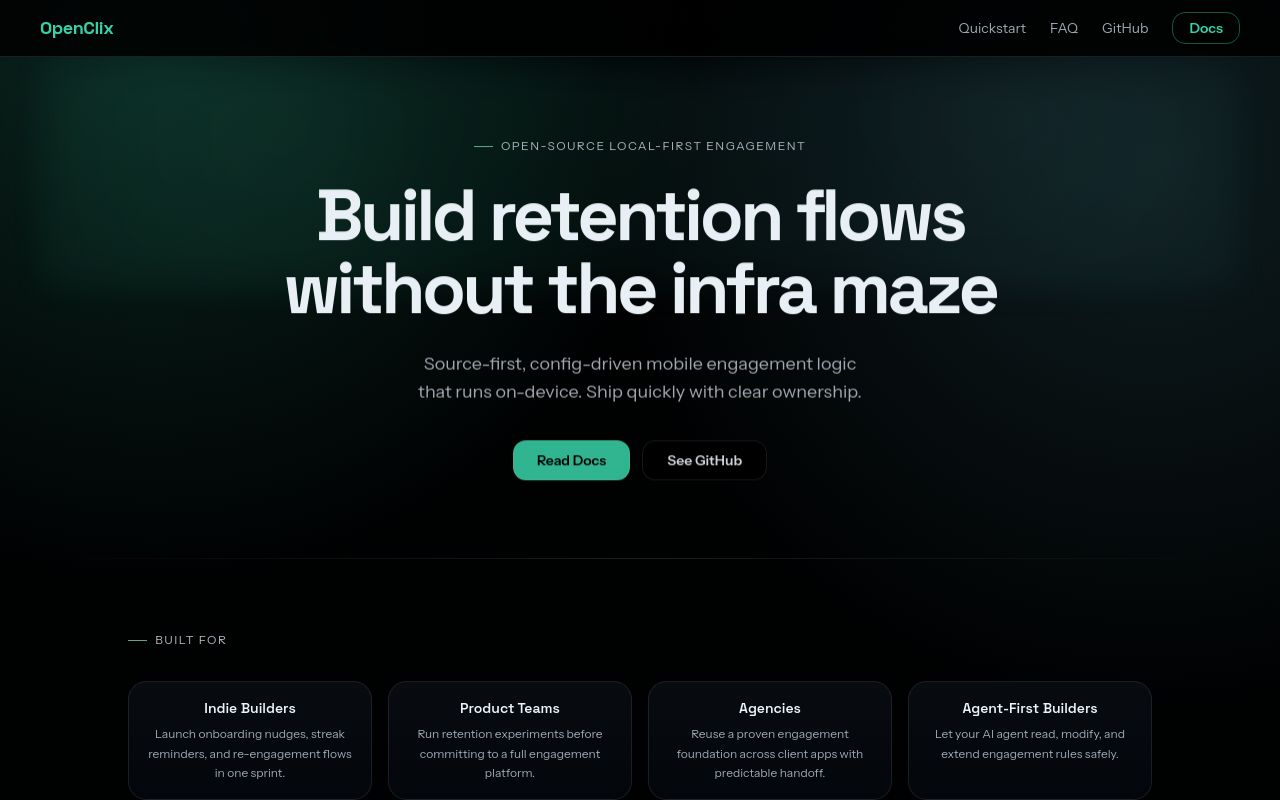
OpenClix is an open-source CLI tool designed to help developers create and manage AI-driven retention flows for mobile applications. With its agent-based approach, OpenClix simplifies the process of integrating smart engagement features into apps, making it easier to retain users through automated interactions. The tool is particularly popular among developers looking for lightweight, customizable solutions to improve user retention without heavy infrastructure changes.
This guide explores OpenClix’s features, installation, use cases, and alternatives while providing an unbiased evaluation based on available data.
OpenClix is an AI-powered CLI tool that enables developers to implement retention-focused workflows in mobile applications. Unlike traditional engagement tools that rely on manual triggers, OpenClix uses an agent-based system to automate personalized interactions.
Key features include:
- Automated Retention Flows: AI agents analyze user behavior and trigger retention strategies such as push notifications, in-app messages, or personalized offers.
- Open-Source Flexibility: Developers can modify the underlying logic to fit specific app requirements.
- CLI-Based Workflow: Designed for developers who prefer terminal-based tools, OpenClix integrates smoothly into CI/CD pipelines.
- Mobile-First Approach: Optimized for mobile apps, supporting both iOS and Android platforms.
According to its Product Hunt listing, OpenClix focuses on "smarter mobile engagement," making it a niche solution for developers who want more control over retention strategies.
Since OpenClix is open-source, installation involves cloning its GitHub repository (exact commands are not specified in available sources). Developers should check the official OpenClix website or GitHub for the latest setup instructions.
Basic usage likely involves:
The tool is designed for developers familiar with CLI environments, and its lightweight nature makes it suitable for teams looking to avoid bloated SaaS solutions.
OpenClix is ideal for scenarios where automated, AI-driven retention is critical. Common use cases include:
- E-Commerce Apps: Sending personalized discount offers to users who abandon their carts.
- Gaming Apps: Re-engaging players who haven’t opened the app in a while with targeted rewards.
- Subscription Services: Reducing churn by identifying at-risk users and delivering retention-focused messaging.
Because OpenClix is open-source, it’s also a good fit for startups and indie developers who need cost-effective retention solutions without vendor lock-in.
When assessing OpenClix, consider the following factors:
- Open-Source Viability: Since it’s community-driven, long-term maintenance depends on contributor activity.
- Ease of Integration: CLI tools require technical expertise—ensure your team is comfortable with terminal-based workflows.
- Customization Depth: While flexible, OpenClix may need additional development to fit complex use cases.
- Commercial Viability: With a low commercial intent score (30), it’s more suited for experimental or non-enterprise use.
The tool’s domain rating of 1.6 suggests limited SEO authority, so developers should verify its stability before committing.
If OpenClix doesn’t meet your needs, consider these alternatives:
- OneSignal: A more established push notification service with broader features but less AI automation.
- Braze: Enterprise-grade engagement with advanced segmentation but higher complexity and cost.
- Firebase In-App Messaging: Google’s solution for app engagement, tightly integrated with Firebase tools.
OpenClix stands out for developers who prioritize open-source, CLI-based workflows over SaaS platforms.
Yes, as an open-source tool, OpenClix is free, but developers may incur costs from third-party services (e.g., push notification providers).
Available information suggests cross-platform compatibility, but check the GitHub repo for specifics.
It offers more control but requires manual setup, unlike out-of-the-box SaaS solutions.
The GitHub repository (if available) or the official website likely hosts contribution guidelines.
Note: Outbound links from automated listings are marked asnofollow for SEO compliance.
OpenClix is a promising tool for developers seeking an open-source, CLI-based approach to mobile app retention. While it lacks the polish of commercial alternatives, its flexibility and AI-driven features make it worth exploring for technically adept teams. Always verify the latest updates from the official source before integration.
Agent-driven retention flows for mobile apps.
No verified install command is listed yet. Use the official project link or repository for setup instructions.
Agent-driven retention flows for mobile apps.
No verified install command is listed yet. Use the official project link or repository for setup instructions.
edgedrop.app
Clipboard on your screen edge. Hover to open, drag to drop

docs.firecrawl.dev
The complete web data toolkit for AI agents

github.com
CLI for Google Workspace ecosystem built for humans & agents